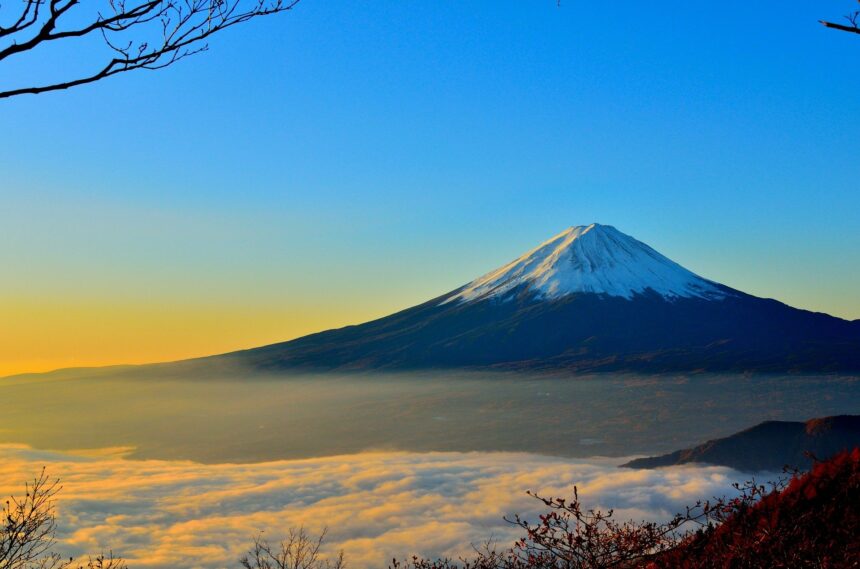
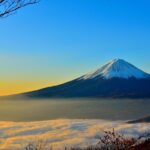
Mt. Fuji is famous because it is a beautiful mountain that is unparalleled in the world with its beautifully stretched base.. Mt. Fuji, the highest mountain in Japan with an altitude of 3776m. Needless to say, it is a well-known symbol of Japan, and its divine appearance has long been the object of artistic motifs and beliefs. Against this background, in 2013, it was registered as a World Cultural Heritage site under the name of “Mt. Fuji-the object of worship and the source of art.” It is also very popular as a trekking course, with more than 280,000 climbers in 2019.
Lake Yamanaka
Recommended points.
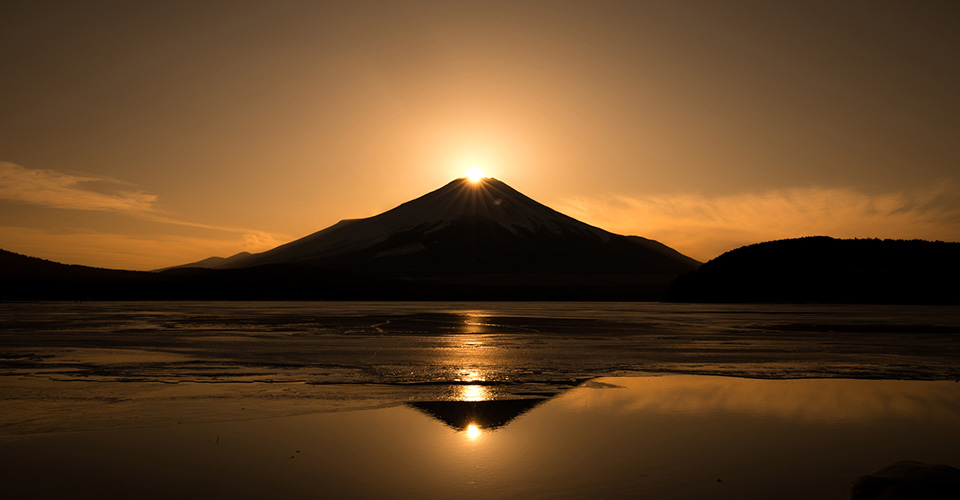
Lake Yamanaka is also known as the lake closest to Mt. Fuji among the five lakes of Fuji, and you can see the magnificent view of Japan’s highest peak up close. The most popular view point is Yamanakako Water Park (Nagaike Water Park) on the north shore of the lake. Many photo enthusiasts visit during mid-November and early February, when “Diamond Fuji” and “Upside-down Fuji” are viewed. In addition, the average summer temperature is as cool as around 20 degrees Celsius, making it a popular summer resort.
Diamond Fuji Lake Yamanaka winter (image)
Lake Yamanaka is one of the Five Lakes of Fuji, along with Lake Motosu, Lake Shoji, Lake Saiko, and Lake Kawaguchi. It is the largest lake in the Fuji Five Lakes and has the only natural river (Sagami River). Not only the view of Mt. Fuji, but also activity experiences such as yachting, windsurfing, and fishing are popular, and the number of tourists visiting is 4 million a year. It is also known as a lake inhabited by Fujimarimo, a natural monument.
Lake Kawaguchi
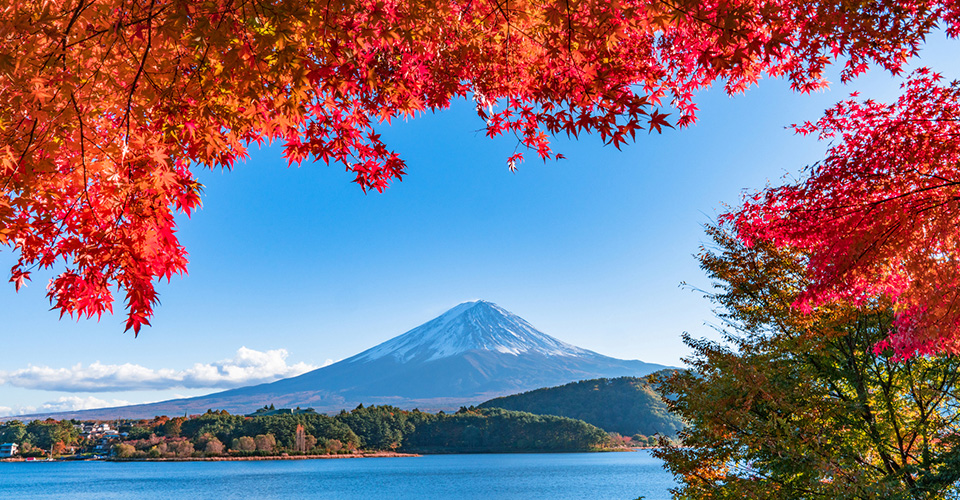
Lake Kawaguchi in autumn colors (image)
Lake Kawaguchi is one of the Five Lakes of Fuji. It was the earliest tourism development in the Fuji Five Lakes, and the lakeside is dotted with many hotels and restaurants, as well as the Kawaguchiko Music Forest Museum, Kawaguchiko Monkey Showman Theater, and Kitahara Museum. Hot springs were excavated in 1992, and many hot spring inns were built in this area, which was originally a tourist destination. It is also widely known as a mecca for bass fishing.
Recommended points
Lake Kawaguchi is known as one of Japan’s leading viewing points for Mt. Fuji. If the natural conditions such as the weather are suitable, you can see the beautiful “upside-down Fuji”. At Oishi Park on the north bank, you can enjoy the beautiful scenery of Mt. Fuji and seasonal flowers such as moss phlox in spring, lavender in summer, and kochia in autumn. We also recommend canoeing, kayaking, and caving in the surrounding caves. The cherry blossom festival in April and the autumn leaves are also popular. The maple corridor of Lake Kawaguchi is also lit up and is visited by many tourists.
Fugaku Wind Cave / Narusawa Ice Cave
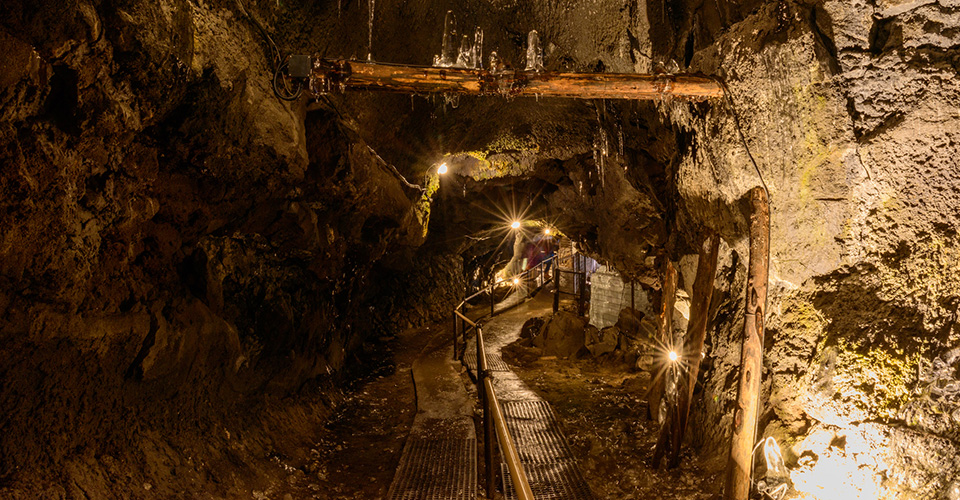
Inside the cave of Fugaku Wind Cave (image)
Fugaku Wind Cave is a cave located in the Aokigahara Jukai at the northwestern foot of Mt. Fuji. The average temperature inside the cave is about 3 degrees Celsius, and it is cool even in the summer. Until the early Showa period, it was used as a natural refrigerator for storing silk moths. The Narusawa Freeze on the east side is also a chilly lava tube like the Fugaku Wind Cave. The icicles are the highlight, and the illuminated appearance is very mysterious. Both are designated as natural monuments.
Recommended points
Fugaku Wind Cave is a horizontal cave that is relatively easy to walk. There is a group of glowing moss in the back, and you can feel the mystery of nature as it glows pale in the dark. On the other hand, the vertical hole type Narusawa Ice Cave is full of undulations such as walking sideways in a tunnel with a height of 91 cm and steep stairs. Both take about 15 minutes, but Fugaku Wind Cave is recommended for children and the elderly. The best time to see the icicles at Narusawa Ice Cave is April. Depending on the year, you may see a huge icicle with a diameter of 50 cm and a height of 3 m.
Oshino Hakkai
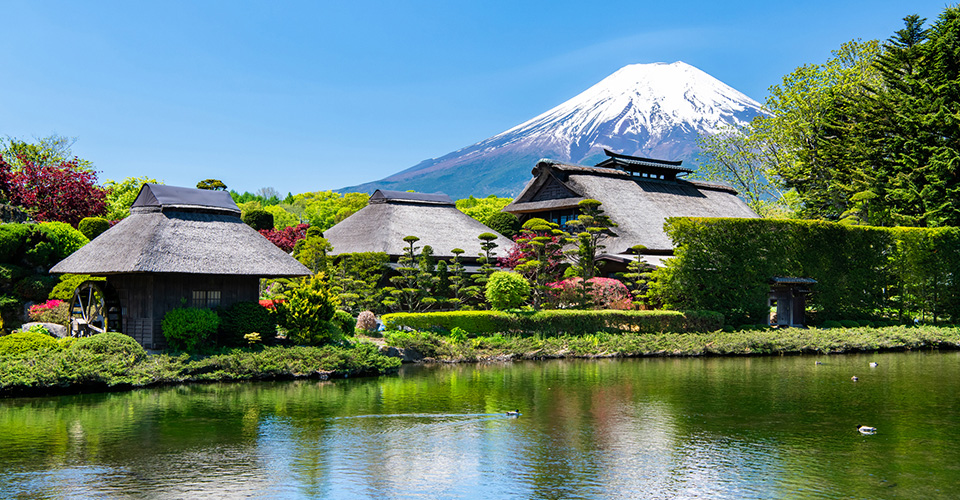
Oshino Hakkai (image)
Lake Oshino, which used to be here, has been transformed into a basin by the repeated eruptions of Mt. Fuji. Of the ponds that remained as spring outlets at that location, Oshino Hakkai is a typical example. It consists of Deguchi Pond, Okama Pond, Bottom Pond, Choshi Pond, Waku Pond, Muddy Pond, Kagami Pond, and Shobuike Pond. In 1934, it was designated as a national natural monument.
Recommended points
As the name suggests, the 5th sacred place “Wakuike” boasts the largest amount of spring water in Oshino Hakkai. The surrounding area is lined with souvenir shops, making it one of the busiest ponds in Oshino Hakkai. On the other hand, the existence of an underwater cave of about 55m from the bottom of the pond to the innermost part has been confirmed, and it has a mystery that other ponds do not have. Mt. Fuji seen from each pond of Oshino Hakkai, including “Wakuike”, is also called “Oshino Fuji”. It rises with cherry blossoms in spring, beautiful snowfall in winter, nostalgic country atmosphere in autumn, and Mt. Fuji in each season. You can enjoy the taste.
Shiraito Falls
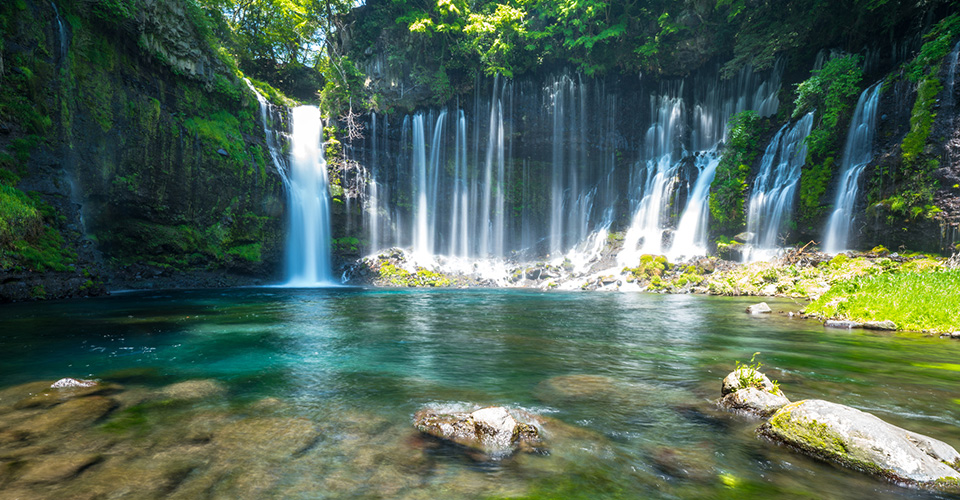
Shiraito Falls (image)
Shiraito Falls, where 1.5 tons of melted snow from Mt. Fuji flows as if silk threads were hung down. Minamoto no Yoritomo, who once visited this area, describes the beauty of Shiraito no Taki as “on top of this, he is any princess or her girlfriend, Shiraito no Taki, which sheds her soul.” In addition to being registered as a World Cultural Heritage site as “Mt. Fuji-the object of worship and the source of art,” it has been selected as a national scenic spot, a natural monument, and one of the 100 best waterfalls in Japan.



この記事へのコメントはありません。